


Plastic flowmeters have become a topic of increasing interest in various industries, and one question that often comes up is whether they can be used in the oil and gas industries. As a supplier of plastic flowmeters, I've heard this question quite a bit, and I'm here to share my insights on this matter.
First off, let's talk about the basic requirements in the oil and gas industries. In these sectors, flowmeters need to handle some pretty tough conditions. They've gotta deal with a wide range of temperatures, different types of oil and gas products, and often-high pressures. They also need to be reliable and accurate, 'cause any measurement error can lead to big problems, like improper flow control or inaccurate billing.
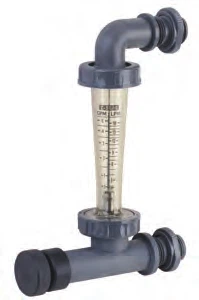

Now, plastic flowmeters have some really nice perks. They're generally lightweight, which makes them easier to install and transport. They're also more corrosion-resistant compared to some metal flowmeters. This is a big deal, especially in oil and gas operations where the presence of corrosive substances like sulfur compounds can be an issue.
However, there are also some challenges. One of the main concerns is the temperature tolerance of plastic. Oil and gas operations can involve extremely high or low temperatures. High temperatures can cause plastic to warp or melt, while low temperatures can make it brittle. This can lead to damage to the flowmeter and inaccurate measurements.
But don't write off plastic flowmeters just yet. Technology has advanced a lot, and there are now plastic flowmeters that are designed to handle specific temperature ranges better. For example, some of the polymers used in our Z - 500V (Valve) Series Plastic Flowmeters are engineered to be more heat - resistant. These flowmeters can withstand moderately high temperatures typically found in some oil and gas processing steps.
Another important factor is pressure. Oil and gas pipelines often operate under high pressure. Plastic flowmeters need to be designed to handle these pressures without leaking or bursting. Our Z - 500E (Elbow) Series Plastic Flowmeters are built with reinforced structures to provide better pressure resistance. They're suitable for applications where the pressure isn't extremely high but still requires a reliable flow measurement.
When it comes to the types of fluids in the oil and gas industries, there are different kinds of oils, gases, and their mixtures. Some of these fluids can be aggressive towards plastics. For example, certain solvents in crude oil can cause the plastic to swell or dissolve. But we've come up with solutions. Our LZS Series flowmeters are made from specially selected plastics that have better chemical resistance to a variety of oil and gas - related substances.
Let's take a look at some real - world applications where plastic flowmeters can work in the oil and gas industries. In some downstream oil processing plants, where the fluids are at relatively lower temperatures and pressures, plastic flowmeters can be a cost - effective choice for measuring the flow of processed oils or some non - aggressive gas streams. They can also be used in some auxiliary systems, like the water injection systems that are used for enhanced oil recovery. Plastic flowmeters in these systems can accurately measure the flow of water, which is crucial for maintaining the right injection rate.
In the case of natural gas measurement at some distribution points, especially where the pressure is not extremely high, plastic flowmeters can provide reliable readings. Their corrosion resistance comes in handy, as natural gas may contain small amounts of moisture and impurities that could potentially corrode metal flowmeters over time.
But it's not all smooth sailing. In some upstream oil and gas exploration and production operations, like deep - sea drilling or high - pressure wellhead applications, the conditions are often too extreme for plastic flowmeters. The high pressures, extreme temperatures, and the presence of highly aggressive drilling fluids usually call for more heavy - duty metal or other specialized flowmeters.
So, to sum it up, plastic flowmeters can indeed be used in some parts of the oil and gas industries. They offer advantages in terms of cost, corrosion resistance, and ease of installation in suitable applications. But you've got to really understand the specific requirements of your operation and choose the right type of flowmeter accordingly.
If you're in the oil and gas industry and think plastic flowmeters might be a good fit for your needs, I'd love to have a chat with you. We can discuss your specific requirements, and I can help you figure out which of our plastic flowmeter series would work best for you. Let's see if we can find the perfect flow measurement solution together!
References
"Flow Measurement Handbook: Principles and Applications" by Richard W. Miller
"Oil and Gas Processing Handbook" by Norman P. Lieberman and Aristides A. Saralidis
"Plastics in Industrial Applications" by various industry experts from engineering publications


