


Hey there! As a supplier of plastic flowmeters, I often get asked about how these nifty devices handle pulsating flow. Pulsating flow is a common issue in many industrial and commercial applications, and it can really throw a wrench in the works if your flowmeter isn't up to the task. So, let's dive in and take a closer look at how plastic flowmeters deal with this challenge.
What is Pulsating Flow?
First things first, let's define what we mean by pulsating flow. In simple terms, pulsating flow is when the flow rate of a fluid isn't constant but instead fluctuates in a regular or irregular pattern. This can happen for a variety of reasons, like the operation of pumps, compressors, or valves. For example, a reciprocating pump creates a pulsating flow because it sucks in and then pushes out fluid in a cyclic manner.
Pulsating flow can be a real headache because it can make it difficult to accurately measure the flow rate. If your flowmeter isn't designed to handle these fluctuations, you might end up with inaccurate readings, which can lead to all sorts of problems, from inefficient processes to equipment damage.
How Plastic Flowmeters Work
Before we get into how plastic flowmeters handle pulsating flow, let's quickly go over how they work in general. Plastic flowmeters are used to measure the flow rate of liquids or gases. They come in different types, such as paddlewheel, turbine, and ultrasonic flowmeters.
Paddlewheel flowmeters have a small wheel with paddles that spin when fluid flows through the meter. The speed of the wheel is proportional to the flow rate, and sensors detect this rotation to calculate the flow. Turbine flowmeters work in a similar way, but they use a turbine instead of a paddlewheel. Ultrasonic flowmeters, on the other hand, use ultrasonic waves to measure the flow rate. They send ultrasonic signals through the fluid and measure how the waves are affected by the flow.
Challenges of Pulsating Flow for Flowmeters
Pulsating flow poses several challenges for flowmeters. One of the main issues is that it can cause the moving parts of a flowmeter, like the paddlewheel or turbine, to oscillate erratically. This can lead to inaccurate readings because the flowmeter might not be able to accurately track the average flow rate.
Another problem is that pulsating flow can create pressure fluctuations. These pressure changes can affect the performance of the flowmeter, especially if it's sensitive to pressure variations. For example, some flowmeters rely on a stable pressure to operate correctly, and pulsating flow can disrupt this stability.
How Our Plastic Flowmeters Handle Pulsating Flow
Now, let's talk about how our plastic flowmeters are designed to handle pulsating flow. We've put a lot of thought and engineering into making sure our flowmeters can provide accurate readings even in the presence of pulsations.
Damping Mechanisms
One of the ways we deal with pulsating flow is by incorporating damping mechanisms into our flowmeters. These mechanisms help to smooth out the erratic movements of the moving parts caused by the pulsations. For example, in our paddlewheel flowmeters, we've designed the paddlewheel to have a certain amount of inertia. This inertia helps to dampen the oscillations caused by the pulsating flow, allowing the flowmeter to more accurately measure the average flow rate.
Signal Processing
We also use advanced signal processing techniques to filter out the noise caused by the pulsations. Our flowmeters are equipped with microprocessors that can analyze the signals received from the sensors. These microprocessors can distinguish between the true flow signal and the noise caused by the pulsations. By filtering out the noise, we can get a more accurate measurement of the flow rate.
Pressure Compensation
To deal with the pressure fluctuations caused by pulsating flow, our flowmeters are designed with pressure compensation features. These features help to ensure that the flowmeter's performance isn't affected by changes in pressure. For example, some of our ultrasonic flowmeters can automatically adjust the measurement based on the pressure of the fluid. This helps to maintain the accuracy of the flow measurement even when the pressure is fluctuating.
Specific Models and Their Performance
We have several models of plastic flowmeters that are particularly well-suited for handling pulsating flow. Let's take a look at some of them.
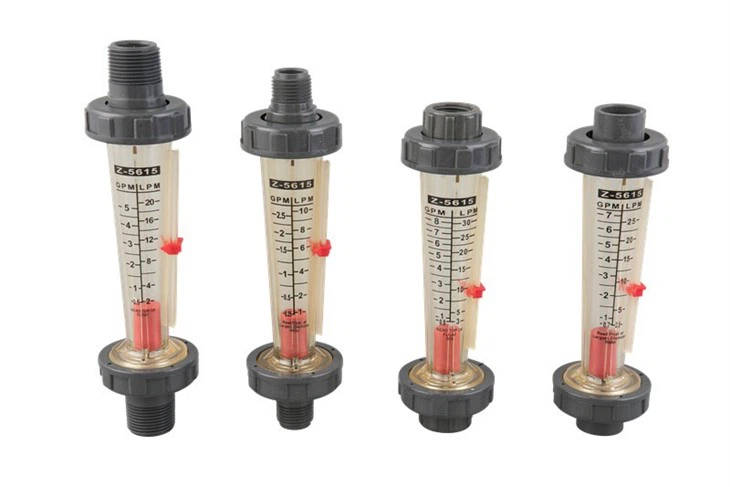
Z-500M (Male) Series Plastic Flowmeters
The Z-500M series is designed with a robust paddlewheel mechanism that has excellent damping properties. This allows it to handle pulsating flow with ease. The series also features advanced signal processing algorithms that can filter out the noise caused by the pulsations. Whether you're dealing with a mild or severe pulsating flow, the Z-500M series can provide accurate and reliable flow measurements.
Z-500G (Glue) Series Plastic Flowmeters
The Z-500G series is another great option for applications with pulsating flow. These flowmeters are made with high-quality plastics that can withstand the pressure fluctuations caused by the pulsations. They also have a unique design that helps to reduce the impact of the pulsations on the moving parts. The Z-500G series is known for its accuracy and durability, even in challenging flow conditions.
Z-500F (Female) Series Plastic Flowmeters
The Z-500F series is specifically designed for applications where accurate flow measurement is crucial, even in the presence of pulsating flow. These flowmeters use advanced ultrasonic technology combined with pressure compensation features. This allows them to provide highly accurate flow measurements, regardless of the pressure fluctuations caused by the pulsations.

Real-World Applications
Our plastic flowmeters have been used in a wide range of real-world applications where pulsating flow is a common issue. For example, in the chemical industry, many processes involve the use of pumps that create pulsating flow. Our flowmeters have been successfully installed in these processes to accurately measure the flow of chemicals.
In the food and beverage industry, our flowmeters are used to measure the flow of liquids such as juices and syrups. The pumps used in these applications often create pulsating flow, but our flowmeters can handle it without any problem, ensuring accurate measurement and efficient production.
Conclusion
In conclusion, pulsating flow can be a real challenge for flowmeters, but our plastic flowmeters are up to the task. With their advanced damping mechanisms, signal processing techniques, and pressure compensation features, our flowmeters can provide accurate and reliable flow measurements even in the presence of pulsations.
If you're dealing with pulsating flow in your application and need a reliable flowmeter, we'd love to help. Our team of experts can work with you to determine the best flowmeter for your specific needs. Whether you're looking for the Z-500M (Male) Series Plastic Flowmeters, the Z-500G (Glue) Series Plastic Flowmeters, or the Z-500F (Female) Series Plastic Flowmeters, we have the right solution for you. Contact us today to start the conversation and find out how we can help you solve your flow measurement challenges.
References
- "Flow Measurement Handbook: Industrial Designs and Applications" by Richard W. Miller
- "Principles of Flow Measurement" by John P. M. Sydenham


