


Hey there! I'm here as a supplier of plastic flowmeters, and today I want to dive into how these nifty devices work in small - diameter pipes.
First off, let's understand what plastic flowmeters are. They're tools used to measure the flow rate of fluids, and they're made of plastic. Why plastic? Well, it's corrosion - resistant, lightweight, and cost - effective. These features make plastic flowmeters a great choice for many applications, especially in small - diameter pipes.
The Basics of Fluid Flow in Small - Diameter Pipes
Before we get into how the flowmeters work, we need to know a bit about fluid flow in small pipes. In small - diameter pipes, the flow of fluid is different from that in large pipes. The fluid tends to have a more laminar flow pattern. Laminar flow means the fluid moves in smooth layers, with each layer sliding past the adjacent ones. This is because the small space restricts the fluid's movement and reduces the chances of turbulent flow.
Turbulent flow, on the other hand, is a chaotic movement of fluid where the particles move in irregular paths. In small pipes, the Reynolds number, which is a measure of the flow regime, is usually lower, indicating laminar flow. This laminar flow is important because it affects how the flowmeter measures the flow rate.
Working Principles of Plastic Flowmeters in Small - Diameter Pipes
Variable Area Flowmeters
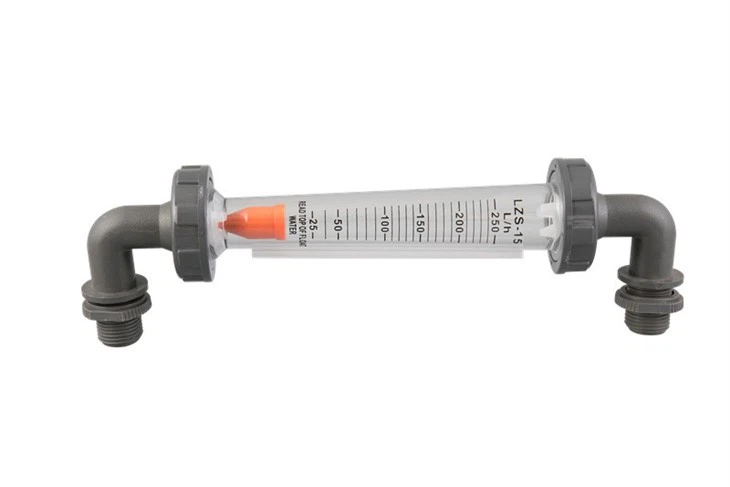
One common type of plastic flowmeter used in small - diameter pipes is the variable area flowmeter, also known as a rotameter. These flowmeters have a tapered tube with a float inside. As the fluid flows through the tube, it pushes the float upwards. The position of the float indicates the flow rate.
In small - diameter pipes, the variable area flowmeters are quite effective. The laminar flow in these pipes allows the float to move smoothly and accurately represent the flow rate. The plastic construction of these flowmeters is ideal as it doesn't corrode when in contact with the fluid. For example, our Z - 500V (Valve) Series Plastic Flowmeters are designed based on this principle. They can handle different types of fluids and are suitable for small - diameter pipes due to their precise measurement capabilities.
Ultrasonic Flowmeters
Ultrasonic flowmeters are another option for small - diameter pipes. These flowmeters work by sending ultrasonic waves through the fluid. The waves are affected by the flow of the fluid, and the change in the waves' properties is used to calculate the flow rate.
There are two main types of ultrasonic flowmeters: transit - time and Doppler. In small - diameter pipes, transit - time ultrasonic flowmeters are often preferred. They measure the difference in the time it takes for ultrasonic waves to travel upstream and downstream in the fluid. The laminar flow in small pipes makes it easier to accurately measure this time difference. Our Z - 560 (psu) Series Plastic Flowmeters use advanced ultrasonic technology, which is highly accurate even in small - diameter pipes.
Magnetic Flowmeters
Magnetic flowmeters, also known as magmeters, are based on Faraday's law of electromagnetic induction. When a conductive fluid flows through a magnetic field created by the flowmeter, a voltage is induced. This voltage is proportional to the flow rate of the fluid.
In small - diameter pipes, magnetic flowmeters can provide accurate measurements. However, the fluid needs to be conductive. Plastic magnetic flowmeters are a great choice as they are lightweight and can be easily installed in small pipes. Our Z - 500E (Elbow) Series Plastic Flowmeters offer this magnetic measurement technology, ensuring reliable performance in small - diameter pipes.
Advantages of Using Plastic Flowmeters in Small - Diameter Pipes
There are several advantages to using plastic flowmeters in small - diameter pipes.
Cost - Effective
Plastic is a relatively inexpensive material compared to metals. This makes plastic flowmeters a budget - friendly option for small - diameter pipe applications. Whether you're setting up a small - scale industrial process or a home - based experiment, plastic flowmeters can save you money without compromising on performance.
Corrosion Resistance
Many fluids can be corrosive, especially in industrial settings. Plastic flowmeters are highly resistant to corrosion, which means they have a longer lifespan. In small - diameter pipes, where replacing a flowmeter can be more difficult, the corrosion resistance of plastic is a huge advantage.
Lightweight
The lightweight nature of plastic flowmeters makes them easy to install and handle. In small - diameter pipes, where space is limited, the ease of installation is crucial. You don't need heavy - duty equipment to install these flowmeters, which can also reduce installation costs.
Applications of Plastic Flowmeters in Small - Diameter Pipes
Plastic flowmeters in small - diameter pipes have a wide range of applications.
Chemical Processing
In chemical processing plants, small - diameter pipes are often used to transport various chemicals. Plastic flowmeters can accurately measure the flow of these chemicals without being corroded. This ensures the proper dosage of chemicals in the process, which is essential for product quality and safety.
Water Treatment
Water treatment facilities use small - diameter pipes for different stages of the treatment process. Plastic flowmeters can be used to measure the flow of water, chemicals, and other additives. Their corrosion resistance makes them suitable for the harsh chemical environment in water treatment plants.

Laboratory Experiments
In laboratories, small - diameter pipes are commonly used in experiments. Plastic flowmeters provide an accurate and cost - effective way to measure the flow of fluids in these experiments. They are easy to install and can be used with different types of fluids.
Choosing the Right Plastic Flowmeter for Small - Diameter Pipes
When choosing a plastic flowmeter for small - diameter pipes, there are a few factors to consider.
Fluid Type
The type of fluid you're measuring is crucial. If the fluid is conductive, a magnetic flowmeter might be a good choice. If the fluid is non - conductive, variable area or ultrasonic flowmeters could be more suitable.
Flow Range
You need to know the expected flow range of the fluid in the small - diameter pipe. Different flowmeters have different flow range capabilities. Make sure to choose a flowmeter that can accurately measure the flow within your expected range.
Accuracy Requirements
The level of accuracy you need depends on your application. For some applications, a rough estimate of the flow rate might be sufficient, while for others, high - precision measurements are required. Consider the accuracy specifications of the flowmeters before making a decision.
Contact Us for Your Plastic Flowmeter Needs
If you're in the market for plastic flowmeters for small - diameter pipes, we're here to help. Our range of plastic flowmeters, including the Z - 500V (Valve) Series Plastic Flowmeters, Z - 560 (psu) Series Plastic Flowmeters, and Z - 500E (Elbow) Series Plastic Flowmeters, offers a variety of options to meet your specific requirements.
Don't hesitate to reach out to us to discuss your needs and get a quote. We're always happy to help you find the perfect plastic flowmeter for your small - diameter pipe applications.
References
- White, F. M. (2011). Fluid Mechanics. McGraw - Hill.
- Miller, R. W. (2003). Flow Measurement Engineering Handbook. McGraw - Hill.


