

What is Balancing Valves
A balancing valve is a specialized valve designed to regulate flow rates and maintain proper pipeline system function. Balancing valves have excellent flow regulation characteristics, they ensure consistency by controlling and equalizing pressure levels in disparate areas throughout piping systems. By ensuring proper flow rate performance, they ensure maximum efficiency and help prevent common issues that can lead to system malfunctions.
Benefits of Balancing Valves
Regulate flow
The balancing valve can adjust the flow in the pipeline as needed to ensure that the medium in the system can operate normally. For systems that require flow control, the balancing valve is very important.
Control temperature
The balancing valve can maintain the temperature of the system stable by adjusting the flow of the medium in the system, thereby ensuring that the temperature of each part of the system reaches a balanced state and avoiding overheating and overcooling.
Balance pressure
The balancing valve can also automatically adjust the valve opening according to the pressure changes in the pipeline to ensure that the pressure of each part of the system reaches a balanced state. This is very important for the stability of high-precision control systems.
Energy saving and throttling
The balancing valve can automatically adjust the valve opening to ensure that the flow and pressure in the system do not exceed the required range, and at the same time, it can also reduce the pressure loss and energy consumption in the system, thereby achieving the purpose of energy saving and throttling.
-
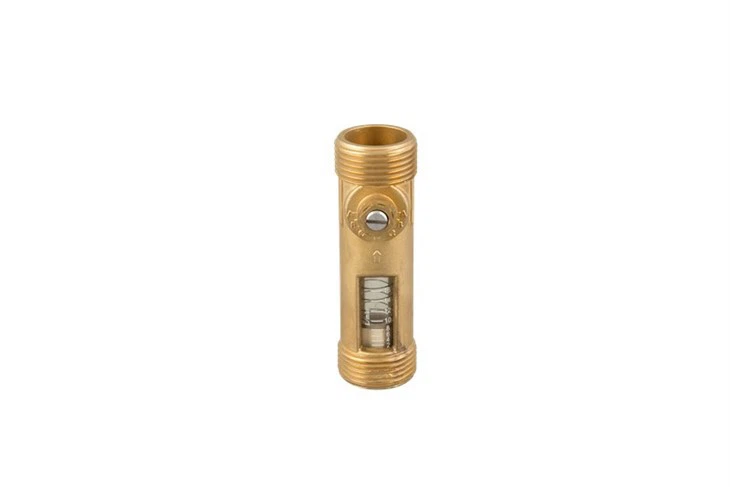
![Z-6200 Series Balancing Valves]() Z-6200 Series Balancing ValvesIn hydraulic heating and cooling systems, the energy carrier is transported over piping sections of different lengths. On the path from the energy generator to them consumer, pipe lengths and turns,
Z-6200 Series Balancing ValvesIn hydraulic heating and cooling systems, the energy carrier is transported over piping sections of different lengths. On the path from the energy generator to them consumer, pipe lengths and turns,

Why Choose Us
Quality Assurance
We have 100% quality guarantee to customers. We will be responsible for any quality problem.
Good Service
We have experienced staff members are always available to discuss your requirements and ensure full customer satisfaction.
Reasonable Price
Our products are complete in variety, good in quality, reasonable in price.
Fast Delivery
Huge production capacity to ensure in time delivery and transport to the destination in the first time.
How Does a Balancing Valve Work?
Balancing valves have a special working mechanism to control water flow. They have an adjustable opening. We can change it to make the flow faster or slower. It’s like a tap that we can turn to regulate water. In open conditions, the valve allows more water to pass through. It increases the flow rate. It is helpful to supply more water to a particular area. It also suits the need for faster cooling or heating. When the valve is half closed, it restricts the water flow. The flow of water slows down.
These valves help us to maintain a balance in flow. To adjust the balancing valve, we turn a handle or a knob. By turning it one way, we can increase the flow. By turning it the other way, we can decrease the flow. The valve works by adjusting the valve to the correct flow rate. It lets each part of the plumbing system get enough water. This helps prevent uneven heating or cooling. It also keeps everything smooth working.
Types of Balancing Valves
Static balancing valves
Static balancing valves also called manual balancing valves or pressure-dependent balancing valves—offer a fixed resistance to water flow. The settings for these valves are calculated before installation and then adjusted when the valves are installed in the field. Internal valve parts remain static during system operations.
Fixed-orifice balancing valves
Fixed-orifice balancing valves are a type of static balancing valve that features a fixed orifice, such as a Venturi insert, combined with pressure/temperature ports that enable measurement of the differential pressure across this orifice. Because the orifice remains set during valve adjustments, the flow rate of the system can be derived easily by the pressure drop measured across the ports. This type of manual balancing valve makes for more efficient commissioning.
Automatic balancing valves
Automatic balancing valves also known as pressure-independent balancing valves and dynamic balancing valves. These valves are designed to automatically maintain a fixed value of flow rate, despite changes in differential pressure, in order to optimize system operation. In contrast to static balancing valves, these valves have internal parts that move to compensate for changes in differential pressure, enabling them to operate more efficiently under variable load conditions.
Pressure-independent flow control valves
Pressure-independent flow control valves are all-in-one devices that combine the capabilities of balancing valves, control valves, and differential pressure regulators. They feature built-in differential pressure regulators that automatically accommodate changes in system pressure to stabilize flow within the heating or cooling components to meet different temperature demands. Pressure-independent control valves can matched with actuators that provide remote flow control capabilities.
Factors to consider when selecting Balancing Valves
Understand the pressure range in your system and which of these pressures the valve will encounter. Determine how the flow rate will change before installing the valve so that any flow-related concerns be avoided. These figures can help you figure out what valve grade you’ll need and rule out any designs that aren’t acceptable. Also, consider if the pressure range will be large or small since this will decide whether a static or dynamic balancing valve is better suited to the application.
This is a critical measurement since pipe diameter affects flow rate, pressure, and a variety of other operating characteristics. When defining your valves, keep in mind that some balancing valves can only be utilized with a certain range of pipe diameters.
Explore a simple static balancing valve for basic resistance; if active control is necessary, consider differential balance valves and/or alternative dynamic designs. Both types of balancing valves are frequently used in combination to provide steady flow through a system, so break down each portion of the system and figure out what form of balancing is required at each phase.
Valves do not operate in silence. When water is throttled, limited, or controlled, the valve usually produces more noise. Look for the specified decibels of noise while utilizing particularly high or heavy flow rates. Material selection is also vital, as you want a valve that won’t react chemically with your fluid or create excessive depositing. Choose wisely since the correct material will keep its strong qualities over time and increase the project’s usable life.
Because these valves are designed to manage flow, they come equipped with instrumentation and measuring equipment to assure correct operation. Determine if control equipment such as dials, magnetic indicators, and/or other measuring devices are required for the project.
Material of Balancing Valves
Brass
Brass is a common raw material in balancing valves. Brass is favored for its strength and versatility. It makes the valve body and other components of the balancing valve.

Stainless Steel
Stainless steel is another raw material in balancing valves. Stainless steel is applicable for rust resistance. It makes those parts of the valve exposed to fluids.

Plastic
Certain parts of the balancing valves consist of plastic. These parts can be knobs or handles. Plastic materials, such as HDPE or ABS, are lightweight. They are sometimes ideal for handles of balancing valves.

Rubber or Silicone
Rubber or silicone materials are gaskets or seals in balancing valves. These materials provide a watertight and flexible seal. It prevents leakage around the balancing valve.
Application of Balancing Valves
HVAC Systems: In HVAC systems, balancing valves are used to regulate the flow of hot or cold water through different zones or loops to ensure that each area receives the right amount of heating or cooling.
Chilled Water Systems: Balancing valves are used in chilled water systems to balance the flow of chilled water through various branches, such as air handling units, fan coil units, and other cooling equipment.
Heating Systems: In heating systems, balancing valves help regulate the flow of hot water through radiators or underfloor heating systems to ensure uniform heating throughout the space.
Domestic Water Systems: Balancing valves can be used in domestic water systems to regulate the flow of water to different fixtures or branches of the plumbing system.
Industrial Processes: Balancing valves are used in industrial processes to control the flow of fluids through different parts of the system, ensuring optimal performance and efficiency.
Components of Balancing Valves

01
Valve body
The valve body of the balancing valve is usually made of materials such as cast iron or brass. Its interior is precisely machined to allow the medium to pass quickly through the pipeline, while regulating the flow and balancing the pressure.

02
Valve core
The valve core of the balancing valve is the core of the balancing valve, usually composed of a spherical or cylindrical piston. The valve core can be selected with sealing rings of different shapes according to different working occasions. The sealing ring material is generally rubber or polytetrafluoroethylene to ensure the sealing performance and durability of the valve.

03
Spring
The spring of the balancing valve is usually installed in the valve cover. The function of the spring is to help the valve core stay in a reasonable position and ensure that the valve can be automatically closed under normal circumstances, thereby maintaining the safety and stable operation of the pipeline system.

04
Adjustment handle
The adjustment handle of the balancing valve is used to control the opening or closing of the valve. It is usually installed on the top of the valve cover. The position of the valve core and the size of the pressure can be changed by rotating the handle, so as to achieve the purpose of controlling the flow and pressure.
• Differential pressure-balancing valve should be installed on the return pipe. The valve is connected to the pressure pipe. The other end of the pressure pipe is connected to the water supply pipe. It is recommended to install a 1/2” sanitary ball valve at the water supply side of the pressure pipe so as to enable congestion elimination function.
• The medium flow direction of the differential pressure-balancing valve should be consistent with the direction of the valve body arrow.
• Filters should be installed on the water supply pipe in front of the pressure pipe to prevent the valve from losing automatic adjustment function due to poor water quality.
• Pressure gauges should be installed on the water supply pipe of the differential pressure balancing valve and the return pipe in front of it to make it easy for regulation and control of the pressure difference.
• If the system flow is too large or too small for the differential pressure-balancing valve, the possible reason is that the debris produced when installing pipe fittings is stuck in the valve plug. In this case, we can close the 1/2” ball valve for 3-5 minutes. If the blockage is not severe, it’ll disappear automatically. If the blockage persists, we need to disassemble the valve to remove the debris.
• Way to control pressure difference: Adjust the valve stem counterclockwise to observe the pressure difference.
How to Test the Balancing Valve?
Test Procedure
Adjust the manifold valves by the hydro manometer manufacturer’s instructions. Adjust the meter or manifold to measure the flow through a balancing valve.
This test primarily measures the water pressure before and after it passes through a valve. Each valve has a fixed orifice that causes a pressure drop when water travels through it. The measured pressure decrease over the valve is compared with published data for the valve that interprets the flow (gallons per minute) through the valve.
Here are the procedures required to pass the exam
Connect the positive pressure hose from the manometer to the 12-inch spigot upstream of the flange’s balancing valve. Insert the probe into the extremity of the hose. The instrument is then inserted into this test port. Hand-tighten the brass fitting to the test outlet of the valve.
Next, connect the negative pressure hose from the manometer to the balancing valve by inserting the probe into the downstream 12-inch flange.
Take a reading of the pressure by tapping the test button on the manometer. The device indicates the pressure decrease across the balancing valve.
Examine the degree setting on the handle of the balancing valve.
To understand the gpm, plot the pressure drop against the degree setting of the balancing valve on the manufacturer’s flow calculator.
Make a comparison of the measured GPM to the required GPM for the system.
Adjust the valve setting as necessary to increase or decrease flow.
Once the desired water flow has been attained, secure the valve by removing the cover atop the handle and tightening the screw. Reconnect the cap to the valve handle.
When diagnosing and troubleshooting HVAC system performance, assuming the volume of water flowing through a system can cause numerous complications. Once the flow value through the system is determined, according to many HVAC company service managers, up to 70% of unresolved service issues can be resolved expeditiously. Temperature rise calculations that confirm acceptable system performance frequently fail due to water flow assumptions. Based on this presumption, water system diagnostics are often incorrect or misleading.
Numerous smaller hydronic systems lack balancing valves. This decision to reduce costs frequently results in the system operating well below its intended performance. These systems’ deployed devices must work outside the manufacturer’s stated specifications. This indicates that they regularly operate at half their laboratory-rated capacity and efficiency under these conditions.
FAQ
We're professional balancing valves manufacturers and suppliers in China, specialized in providing high quality products and service. We warmly welcome you to buy or wholesale high-grade balancing valves for sale here from our factory.
Mount In Any Position Valves, Z 6200 Series Balancing Valves, Balancing ValvesPopular Products


