

What is General Use Solenoid Valve
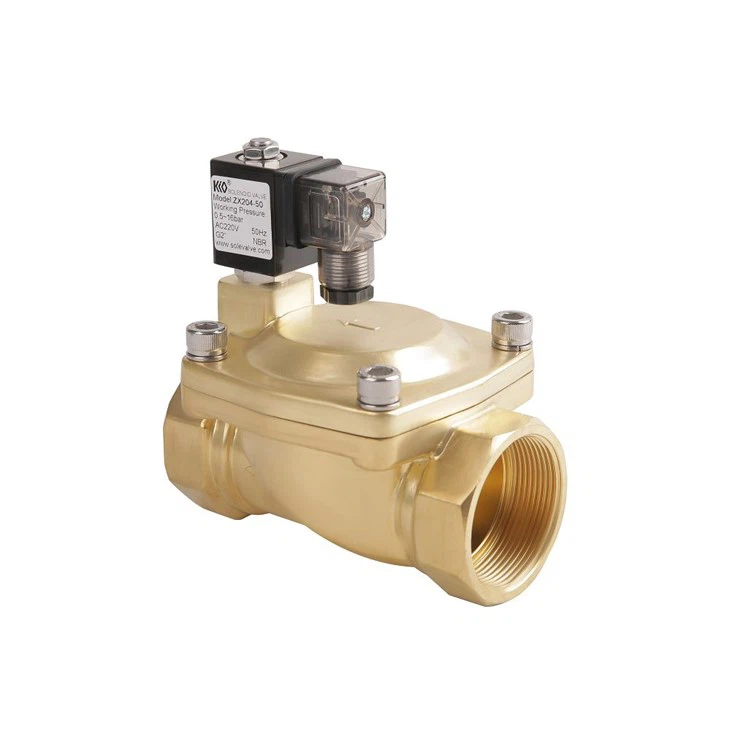
General use solenoid valve is a mechanical device that moves with the effect of a magnetic field around a coil through which electric current is passed. General use solenoid valves control water, air, light oil, and other corrosive and non-corrosive types of media. These electromagnetic devices use an inductive wire coil to actuate a metallic plunger. When energized, a magnetic field is generated and moves the plunger up and down automatically to open or close the valve, which starts or stops the flow of media.
Benefits of General Use Solenoid Valve
High cost performance
Since the general use solenoid valve is controlled by a switch signal, it is very convenient to connect with the computer. In today’s era when computers are popular and prices drop sharply, the advantages of solenoid valves are even more obvious. The general use solenoid valve itself has a simple structure and a relatively low price. It is easier to install and maintain than other types of actuators such as control valves.
Good safety performance
The structure of the general use solenoid valve is easy to control internal leakage until it drops to zero. The solenoid valve is completed by using electromagnetic force to act on the iron core sealed in the magnetic isolation sleeve. There is no dynamic seal, so the external leakage is easy to block. Therefore, the general use solenoid valve is very safe to use, especially suitable for corrosive, toxic or high and low temperature media.
Energy saving
The response time of the general use solenoid valve can be as short as a few milliseconds, even the pilot solenoid valve can be controlled within tens of milliseconds. Because of its self-contained circuit, it is more sensitive than other automatic control valves. A properly designed solenoid valve coil has low power consumption and is an energy-saving product. It is also possible to automatically maintain the valve position by simply triggering the action without consuming electricity at all. The general use solenoid valve is small in size, which saves space and is light and beautiful.
The adjustment accuracy is not high and is affected by the flow medium
General use solenoid valves usually have only two states on and off. The spool can only be in two extreme positions and cannot be adjusted continuously. There are many new ideas trying to break through, but they are still in the trial stage, so the adjustment accuracy is still subject to certain restrictions.
-
![2W Series 2/2 Way Brass Solenoid Valve]() 2W Series 2/2 Way Brass Solenoid ValveConventional two-way direct acting normally closed solenoid valve:. ●The main body can be divided into brass forging and stainless steel frosting.
2W Series 2/2 Way Brass Solenoid ValveConventional two-way direct acting normally closed solenoid valve:. ●The main body can be divided into brass forging and stainless steel frosting. -
![2/2 Way Stainless Steel Solenoid Valve]() 2/2 Way Stainless Steel Solenoid ValveConventional two-way direct acting normally closed solenoid valve:. ●The main body can be divided into brass forging and stainless steel frosting.. ●Large diameter and large flow.
2/2 Way Stainless Steel Solenoid ValveConventional two-way direct acting normally closed solenoid valve:. ●The main body can be divided into brass forging and stainless steel frosting.. ●Large diameter and large flow. -
![2W Direct Acting Solenoid Valve]() 2W Direct Acting Solenoid ValveTwo way direct acting normally closed solenoid valve. :●The body is made of copper forging and stainless steel frosting, with small volume and easy installation.. ●It is mainly used for on-off
2W Direct Acting Solenoid ValveTwo way direct acting normally closed solenoid valve. :●The body is made of copper forging and stainless steel frosting, with small volume and easy installation.. ●It is mainly used for on-off -
![Direct Acting Solenoid Valve]() Direct Acting Solenoid ValveTwo way direct acting normally closed solenoid valve:. ●Body copper forging, small volume, easy installation.. ● It is mainly used for on-off control of gas or fluid.. ● Various diameters correspond
Direct Acting Solenoid ValveTwo way direct acting normally closed solenoid valve:. ●Body copper forging, small volume, easy installation.. ● It is mainly used for on-off control of gas or fluid.. ● Various diameters correspond -
![2 Way Direct Acting Solenoid Valve]() 2 Way Direct Acting Solenoid ValveTwo way direct acting fuel valve:. ● Simple structure and small size.. ● Forged body, chrome plated shell.. ● Widely used in gas shielded welding machine, all kinds of burners.
2 Way Direct Acting Solenoid ValveTwo way direct acting fuel valve:. ● Simple structure and small size.. ● Forged body, chrome plated shell.. ● Widely used in gas shielded welding machine, all kinds of burners. -
![2/2 Way Universal Solenoid Valve]() 2/2 Way Universal Solenoid ValveTwo position two way universal valve:. ● Zero pressure start, no minimum pressure requirement, wide application.. ● Standard plastic encapsulated waterproof coil, protection grade IP65.. ● The latest
2/2 Way Universal Solenoid ValveTwo position two way universal valve:. ● Zero pressure start, no minimum pressure requirement, wide application.. ● Standard plastic encapsulated waterproof coil, protection grade IP65.. ● The latest -
![2/2 Way Universal Pilot Diaphragm Valve]() 2/2 Way Universal Pilot Diaphragm ValveTwo position two way universal pilot diaphragm valve:. ●Adopt the design of forming diaphragm, large flow and long service life.. ● Standard plastic encapsulated waterproof coil, protection grade
2/2 Way Universal Pilot Diaphragm ValveTwo position two way universal pilot diaphragm valve:. ●Adopt the design of forming diaphragm, large flow and long service life.. ● Standard plastic encapsulated waterproof coil, protection grade -
![Universal Solenoid Valve]() Universal Solenoid ValveConventional two-way direct acting normally closed solenoid valve:. ● The main body can be divided into brass forging and stainless steel frosting.. ●Large diameter and large flow.
Universal Solenoid ValveConventional two-way direct acting normally closed solenoid valve:. ● The main body can be divided into brass forging and stainless steel frosting.. ●Large diameter and large flow. -
![Universal Pilot Diaphragm Valve]() Universal Pilot Diaphragm ValveTwo way steam normally closed solenoid valve:. ● The body can be divided into brass forging and stainless steel frosting.. ● The sealing parts are PTFE and FKM, which can withstand the temperature of
Universal Pilot Diaphragm ValveTwo way steam normally closed solenoid valve:. ● The body can be divided into brass forging and stainless steel frosting.. ● The sealing parts are PTFE and FKM, which can withstand the temperature of


Why Choose Us
Quality Assurance
We have 100% quality guarantee to customers. We will be responsible for any quality problem.
Good Service
We have experienced staff members are always available to discuss your requirements and ensure full customer satisfaction.
Reasonable Price
Our products are complete in variety, good in quality, reasonable in price.
Fast Delivery
Huge production capacity to ensure in time delivery and transport to the destination in the first time.

General use solenoid valves make up almost 80% of market demands, but will probably be only less than 10% of the manufactured range of solenoid valves. Imagine walking into a solenoid valve store and being confronted with 1,000's of solenoid valves and most customers wanted the same selection of only about 20. Well this is the essence of general use solenoid valves selection, if users need a basic on/off general solenoid valve having only a simple selection to choose from can make life much easier.
Yes, solenoid valves can experience leakage, which is classified into two categories: external and internal leakage. External leakage is typically more apparent and can be attributed to issues with O-ring seals. This external leakage may occur due to worn-out O-rings, which can result from extended usage or improper installation. The solution to address external leakage is the correct installation of new O-ring seals. Additionally, solenoid valves that employ diaphragms as sealing components may encounter external leakage through a process known as wicking. Wicking occurs when pressurized fluid seeps through the diaphragm material between the rubber and reinforcing layers of the diaphragm, causing external leakage.


Brass: Brass has good corrosion resistance with neutral media, such as water.
Stainless steel: Stainless steel has good chemical, temperature, and pressure resistance.
PVC: PVC and polyamide are commonly used as they are cost efficient. They are also used in high-end applications with aggressive chemicals.
Aluminum: Aluminum's lightness, strength, and thermal properties make it a cost-effective and reliable choice for solenoid valve housings.
Cast iron: Cast iron provides a strong, wear-resistant, and cost-effective housing for solenoid valves, with added vibration damping suitable for tough industrial applications.
Choose Your General Use Solenoid Valve
Determine the Valve Type
Consider whether you need a 2-way, 3-way, or 4-way valve based on the flow path and control requirements of your application.
Valve Configuration
Decide whether you need a normally open (NO), normally closed (NC), or a universal valve that can be configured as both NO and NC.
Pressure and Temperature Ratings
Determine the maximum pressure and temperature conditions your valve will encounter and select a valve rated for those conditions.
Fluid Compatibility
Ensure the valve materials are compatible with the fluid you are controlling. Different fluids may require specific materials to prevent corrosion or chemical reactions.
Voltage and Electrical Compatibility
Choose a solenoid valve that matches the voltage and electrical specifications of your system. Common voltages include 12V DC, 24V DC, 24V AC, 120V AC, and 240V AC.
Environmental Conditions
Consider the environmental conditions where the valve will operate, including humidity levels, potential exposure to dust or water, and ambient temperature ranges.
Flow Rate
Calculate the required flow rate (in gallons per minute, liters per second, etc.) to ensure the valve can handle the desired flow without excessive pressure drop.
Special Features
Determine if your application requires specific features such as manual overrides, position indicators, or explosion-proof certifications.
Safety and Redundancy
In critical applications, consider valves with safety features like redundant coils or fail-safe mechanisms to ensure system reliability.
Seals
Seals are core factors that affect the low and high temperature in a solenoid valve; it is categorized in three structures, which is divided into piston pilot valve, membrane pilot valve, and direct acting. Seals are very important when choosing a valve because it is suitable for use in a harsh environment with a ranging temperature from -100°C to +260°C. Polytetrafluoroethylene (PTFE) will be categorically the best choice for it’s excellent resistant to aqua regia and all kinds of organic solvents.
Solenoid Coil
A solenoid coil is another essential factor that affects the low and high temperature in a solenoid valve. The duty cycle of your coils when the coil is improperly sized can cause failure to the operation, especially when operating a valve at 100% duty cycle. It also has a similarity with that of the valve seal due to its capability to function in harsh environments. Besides pressure, flow rate and pressure drop considerations, we need to use class H coils rated to 180°C, practically the copper wire can withstand a high temperature of but cannot exceed 180°C and when designing a machine, coil temperature should be considered to avoid undesired failures such as the degraded of solenoid valve performance.
Low power and Low temperature
Power is essential in solenoid application, in some remote locations such as oil and gas transmission power plants or extraction sites, conventional valves may require heat tracing or protection and users may simply appreciate lowering energy costs. More critically, these and other power demands often necessitate larger and more costly power supplies like the battery charging systems or solar panels.
Radiation Devices
Radiation devices have a high effect on solenoid valves especially when not installed in the appropriate position, the device will spread part of temperature and the fluid temperature transmits to the coil very fast, and there’s high tendency for the coil to easily burn out or functional disability. So users should ensure to install radiator device between coils and valve body.
What Are the Parts of the General Use Solenoid Valve?
Valve Body: The body forms the main structure of the valve, housing components such as: the diaphragm, disc, seat, and inlet and outlet ports.
Coil Windings: The solenoid coil assembly consists of a series of wire turns wound around a ferromagnetic core, like steel.
Plunger/Piston/Core: When the solenoid coil is energized, the plunger generates a magnetic field that causes the plunger to move either upward or downward.
Inlet Port: The inlet port is where the fluid initially enters the solenoid valve.
Outlet Port: The fluid, once controlled by the solenoid valve, exits through the outlet port.
Solenoid Coil: The solenoid coil, typically made of steel or iron, serves as an electromagnet assembly.
Lead Wires: These external connections enable the passage of electrical current from a power supply to the solenoid valve when it’s energized.
Solenoid Spring: A spring is included to provide the necessary tension to hold the plunger in place.
Orifice: The orifice serves as a crucial element in connecting the inlet and outlet ports. It is managed by the movement of the plunger or piston, which is regulated by the spring and the electric current flowing through the valve.
Diaphragm: A flexible material, the diaphragm isolates the solenoid from the fluid and is designed to withstand the fluid’s pressure.
Stem: The stem is connected to the valve and serves as the point of attachment for the core or plunger.
Disc: The disc prevents the fluid flow when the valve is in a closed position.
Seat: The seat is the opening that the disc presses against during valve closure.
Seal: Similar to the diaphragm, the seal acts as a barrier, separating the solenoid from the fluid.
Application of General Use Solenoid Valve

Food Industry
Thermoforming, Stacking, Palletising, Storage and Packing of food products are increasingly being controlled and handled by automated and robotic processes. General use solenoid valves are fine for basic applications in non hazardous and non food or corrosive environments however in food factories in is generally recommended to standardise on 2/2, 3/2 and 5/2 way stainless steel solenoid valves.

Industrial and Manufacturing Plant Valve Actuators
For fluids that cannot be handled by general use solenoid valves, pneumatic, hydraulic and motor actuators are commonly used. However, due to the ease of control using solenoids, solenoid valves are integrated into pneumatic and hydraulic valves actuators. Control valves in industrial plants are usually actuated by a compressed air system controlled by solenoid valves.

Automation
General use solenoid valves are used whenever fluid flow must be controlled automatically, such as in robotics or factory automation. These solenoid valves are controlled by microcontrollers or programmable logic circuits with a coded set of actions. This control of fluid flow allows a defined sequence of actions to be executed precisely and accurately by a robot.
Medical, Pharmaceutical and Food Manufacturing
Common uses of general use solenoid valves in medical equipment are custom valves for dialysis machines, anesthesia machines and ventilator systems. Pharmaceuticals and food processing use solenoid valves complying with hygienic requirements.
Common General Use Solenoid Valve Issues And How To Troubleshoot Them
Rusting, power failure, irregular pressure, missing equipment, an incorrect amount of voltage or current, dirt stuck in the system and corrosion are some of the possible reasons why a solenoid valve may not properly close or open. Since there are many causes of this issue, it can be challenging to solve this problem without professional help.
However, you should perform the following troubleshooting steps: Thoroughly examine the power supply. Ensure that the voltage, current and frequency are correctly supplied to the valve. Check the connections and make sure they are properly installed. If there is any dirt or corrosion in the diaphragm, safely clean it. Ensure that all of the essential components are present. Ensure the amount of current supplied to the valve complies with its specifications.
It is also possible that the solenoid valve only partially closes. It can happen due to a manual override, uneven pressure, problems in coil power, dented armature tube, damaged valve seats or some misplaced part of the system. To solve this issue, you should carefully check the wiring, connections between the components, diaphragm settings and the working of the coil. In case of an inverted diaphragm, try to refit it before replacing it.
Numerous issues can happen with the coil. It can get burnt, melted, or may remain cold even when the power is on. Such issues usually happen due to a short circuit, slow coil armature, incorrect supply of voltage or high temperatures of the gas or liquid.
To troubleshoot the issues associated with the coil, follow these steps: Inspect the power supply and ensure it is correctly supplied to the valve and the coil. Coil requires ventilation to dispel heat. Ensure that the power supply (AC, DC) is compatible with the coil’s specifications. If the coil is burnt or completely damaged; replace it with a new suitable coil. Do not power the coil before its complete installation on the solenoid valve. Examine if there is any moisture on the coil or the surrounding areas. Replace the damaged armatures. Check the temperature of gas and liquids.
If there is an irregular pressure on the valve, it can produce disturbing sounds on opening and closing. Sometimes a buzzing sound can be heard from the solenoid valves. Although most of the time, the pressure difference is the main reason behind these sounds, sometimes water hammering can also be the cause. Installing a T-piece pipe can reduce the noise. Moreover, dimensions of the pipe can also be increased to reduce the speed of the liquid and prevent water hammering. You should contact an experienced solenoid valve supplier for proper installation of the system. Usually, the size of the pipes is enlarged to reduce the inlet pressure on the valves and mitigate this issue.
Over time, different particles such as dust and sediments enter the valves and start affecting their operation. As a result, they cannot perform their function optimally. Ultimately, a considerable amount of contamination damages a valve and results in leakage and partial closing issues. Valve leakage is a clear indication of the fact that impurities are preventing the valve from completely closing. Moreover, contamination can completely block a valve, leading to valve failure.
There are two main things that you can do to troubleshoot this kind of issue: Check the components of the valve. Make sure they are not damaged. If they are, replace them. Carefully clean all of the parts of a valve. Remove any kind of foreign particle, sand, rust or dust from it.
How to Maintain General Use Solenoid Valve
Disconnect power source: Disconnect the power supply and depressurize the system before performing any maintenance on the solenoid valve. This will prevent any accidental valve actuation during maintenance, which could result in injury.
Inspect the coil: Inspect the solenoid valve for cracks or burnout. Never power up the coil if it is not installed on the valve stem, as the high current can burn it. Also, moisture penetrating the coil can lead to valve failure. Check the connections to the coil for damage or corrosion.
Clean the internal parts: Use a wrench to remove the valve stem. This exposes the internal components of the solenoid valve, like the plunger, seal, spring, and o-ring . Wipe dust or debris from the valve body and the internal components using a clean cloth. Clean these components in running water to remove any accumulated dirt. Examine the components for damage and replace them as needed.
Inspect the internal parts: Check for signs of swelling, cracking, or general deterioration on the seal. Inspect the spring for broken coils. Inspect the interior of the valve for deposits, swelling, or rust that may affect the movement of internal parts or cause leakage. Look for any indications of general crest deterioration or scratches near the orifice. Additionally, examine the top part of the plunger and the interior part of the stem for signs of deterioration.
Repair or replace: After inspecting the solenoid valve for possible faults, it's time to determine if it's best to repair or replace a few components or replace the entire valve. If it's a small part to replace, like an o-ring, it's best to just replace the component and reassemble the valve. Often, it is more cost-effective to replace the entire valve unit in basic applications.
Reassemble the solenoid valve: Once the necessary parts have been replaced and any buildup removed, attach the coil again and reinstall the solenoid valve, following the manufacturer's instructions for your particular application.Confirm the parts are correctly installed before switching on the power.
Test the valve: Once the solenoid valve is reassembled, ensure it functions correctly. Apply power to the valve and observe its operation. Check for any leaks, unusual noises, or other signs of malfunction.
Record the maintenance: Record the maintenance performed on the valve, including the date, type of maintenance, and any observations or notes. This information will be useful in tracking the valve's performance over time and planning future maintenance.
FAQ
We're professional general use solenoid valve manufacturers and suppliers in China, specialized in providing high quality products and service. We warmly welcome you to buy or wholesale high-grade general use solenoid valve for sale here from our factory.
Universal Pilot Diaphragm Valve, Water solenoid valve, 2W Series 2 2 Way Brass Solenoid ValvePopular Products


